
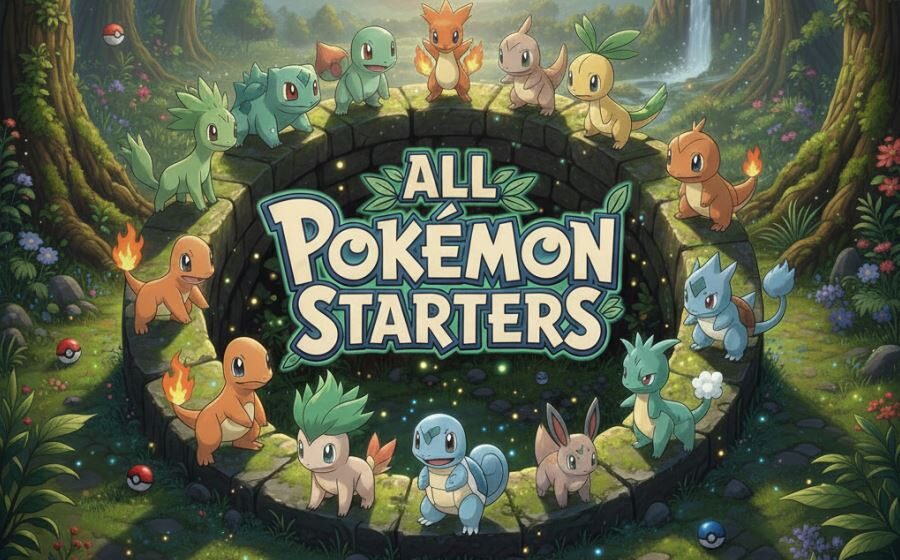
Pokémon is one of the most beloved video game franchises worldwide, with players exploring vast regions and capturing creatures known as Pokémon. One of the most important decisions in any Pokémon game is choosing a “starter Pokémon.” These are the first Pokémon you receive at the beginning of your adventure, and they play a crucial role in shaping your journey.
Starter Pokémon are significant because they are the first companions players get to know and bond with. Each starter comes with its own type—Fire, Water, or Grass—and their evolution will grow alongside you throughout the game. This choice is often the first step toward creating a personalized team that will face the challenges of the game world.
In this article, we’ll take a closer look at all the starter Pokémon across the generations. Whether you’re a long-time fan or a newcomer to the series, we’ll explore the variety of starters, how they have evolved, and what makes each generation special. Let’s dive into the world of Pokémon starters and see how they’ve shaped the gameplay over the years.
What Are Pokémon Starters?
In the world of Pokémon, starter Pokémon are the first creatures that players receive at the beginning of their adventure. These Pokémon are essential because they mark the start of a player’s journey and are often their first companion. When you begin a Pokémon game, you are given a choice between three starter Pokémon, each belonging to a different elemental type: Fire, Water, or Grass.
The role of starter Pokémon in the game is significant. They help players learn the basic mechanics of the game, such as battling and training Pokémon. Each starter has its own set of moves and stats that evolve as they gain experience throughout the game. These Pokémon will grow stronger, evolve into more powerful forms, and often become key members of a player’s final team.
Choosing a starter is an important decision because it influences your early gameplay experience. For example, each starter type has different strengths and weaknesses, which can affect how you approach battles with other trainers and wild Pokémon. The choice of starter also impacts your first few gym battles, as each region typically has specific types of Pokémon that are either strong or weak against your starter. This early decision sets the tone for how your adventure unfolds and can significantly influence your strategy and team composition.
Overview of the Starter Pokémon Types
Starter Pokémon are divided into three main types: Fire, Water, and Grass. These types not only represent the elemental characteristics of the Pokémon but also define the strengths and weaknesses they have in battles.
- Fire-type Starters: Fire-type Pokémon are often associated with strong offensive power. They tend to be fast and deal a lot of damage in battle. However, their main weakness is Water-type Pokémon, which can easily douse their flames. In addition, Fire-type Pokémon are usually less effective against certain other types, such as Rock or Ground. Despite these weaknesses, Fire-type starters are known for their aggressive nature and powerful final evolutions.
- Water-type Starters: Water-type Pokémon are typically balanced, offering good offensive and defensive abilities. Water is strong against Fire-type Pokémon but weak against Electric and Grass-type opponents. Water starters often have versatile moves, making them flexible in many battle situations. They are generally useful for a wide variety of challenges in the game, especially in regions where Water-type Pokémon have access to strong moves like Surf or Ice Beam.
- Grass-type Starters: Grass-type Pokémon are known for their defensive and supportive abilities. While they are strong against Water-type Pokémon, they are particularly weak to Fire and Bug-type Pokémon. Grass starters often have moves that help them heal or provide status effects, but they may face difficulty in offensive battles against the stronger Fire-types. However, Grass-type Pokémon can be excellent for strategic play, especially when they evolve into powerful forms with access to moves like Solar Beam.
Each type of starter Pokémon has its advantages and disadvantages, making the selection process an important part of the game strategy. The balance between Fire, Water, and Grass creates an exciting dynamic that challenges players to think carefully about their choice, as each type will have a significant impact on how the early part of the game plays out.
The Generations of Pokémon Starters
Each Pokémon generation introduces new starter Pokémon, each with their own unique traits and evolution paths. Let’s explore the evolution of starters from Generation I to Generation IX, covering their significance and impact on the Pokémon franchise.
Generation I: Kanto Region
- Bulbasaur, Charmander, Squirtle
The first-ever starter Pokémon from the Kanto region introduced players to the classic choices: Bulbasaur (Grass/Poison), Charmander (Fire), and Squirtle (Water). These starters became iconic due to their memorable designs and evolutions. Bulbasaur evolves into Ivysaur and finally into Venusaur, Charmander evolves into Charmeleon and Charizard, while Squirtle evolves into Wartortle and Blastoise.
Impact: The Kanto starters laid the foundation for the entire franchise, becoming beloved characters in the series. Their balanced types and simple evolutions played a significant role in the early success of Pokémon, marking the start of an era that would grow into one of the most successful franchises in gaming history.
Generation II: Johto Region
- Chikorita, Cyndaquil, Totodile
In the Johto region, Generation II introduced three new starter Pokémon: Chikorita (Grass), Cyndaquil (Fire), and Totodile (Water). Unlike the original Kanto starters, the Johto starters were given access to new evolutions and mechanics, such as the introduction of dual-type evolutions and Held Items.
Legacy: The Johto starters had a lasting impact on the franchise, particularly with their evolutions. Typhlosion, Feraligatr, and Meganium became fan favorites and helped to expand the narrative depth of the Pokémon universe.
Generation III: Hoenn Region
- Treecko, Torchic, Mudkip
The Hoenn region introduced Treecko (Grass), Torchic (Fire), and Mudkip (Water), each with unique traits. Treecko evolves into Grovyle and Sceptile, Torchic into Combusken and Blaziken, and Mudkip into Marshtomp and Swampert.
Unique Traits: The Hoenn starters stood out due to their types and the introduction of Mega Evolutions in later generations, making them highly competitive in battles. The region also introduced more diverse ecosystems and weather mechanics, which presented challenges for trainers.
Mega Evolutions allowed these starters to access powerful forms, boosting their strength in later games and reinforcing their significance in Pokémon battles.
Generation IV: Sinnoh Region
- Turtwig, Chimchar, Piplup
The Sinnoh starters—Turtwig (Grass), Chimchar (Fire), and Piplup (Water)—are remembered for their evolving playstyle and introduction of new battle mechanics. Turtwig evolves into Grotle and Torterra, Chimchar into Monferno and Infernape, and Piplup into Prinplup and Empoleon.
Significance: The Sinnoh region introduced new battle features like Abilities and Held Items, adding complexity to Pokémon battles. These starters provided great strategic depth in competitive gameplay, with Infernape especially becoming a top pick for many competitive trainers.
Generation V: Unova Region
- Snivy, Tepig, Oshawott
In Unova, Generation V marked a shift with Snivy (Grass), Tepig (Fire), and Oshawott (Water). These starters introduced new mechanics and expanded the Pokémon universe with more complex storylines. Snivy evolves into Servine and Serperior, Tepig into Pignite and Emboar, and Oshawott into Dewott and Samurott.
New Features: Generation V introduced the Seasonal Cycle and new battle mechanics that added extra layers to gameplay, making it one of the most dynamic generations. The Unova starters are still cherished by fans, particularly for their distinct designs and memorable evolutions.
Generation VI: Kalos Region
- Chespin, Fennekin, Froakie
The Kalos region brought a fresh twist with Chespin (Grass), Fennekin (Fire), and Froakie (Water). Kalos introduced Mega Evolutions, which allowed Pokémon to temporarily transform into stronger forms during battles. Chespin evolves into Quilladin and Chestnaught, Fennekin into Braixen and Delphox, and Froakie into Frogadier and Greninja.
Impact of Mega Evolutions: The introduction of Mega Evolutions in Generation VI had a huge impact on starter Pokémon. Greninja, in particular, became a fan favorite due to its Ash-Greninja form, which allowed it to fuse with the player’s character and gain enhanced powers.
Generation VII: Alola Region
- Rowlet, Litten, Popplio
In the Alola region, Generation VII introduced Rowlet (Grass/Flying), Litten (Fire), and Popplio (Water). These starters reflected the tropical nature of the Alola region and introduced a departure from traditional evolutions.
Unique Evolution: The Alola starters were known for their distinct evolutions, such as Decidueye (Rowlet’s final form), which combined Grass with Ghost-type. Litten’s evolution into Incineroar was unique, taking on the role of a Fighting-type Pokémon, while Popplio’s final form, Primarina, became one of the most graceful and powerful Water-types.
Generation VIII: Galar Region
- Grookey, Scorbunny, Sobble
The Galar region saw the introduction of Grookey (Grass), Scorbunny (Fire), and Sobble (Water). This generation emphasized the new Dynamax and Gigantamax features, which allowed Pokémon to grow massive in size and strength during battles.
Popularity: The Galar starters were praised for their modern designs and powerful evolutions. Scorbunny, evolving into Cinderace, quickly became one of the most popular starter Pokémon for its competitive ability and fun design.
Generation IX: Paldea Region
- Sprigatito, Fuecoco, Quaxly
In the newest addition, the Paldea region introduced Sprigatito (Grass), Fuecoco (Fire), and Quaxly (Water). These starters are early favorites, offering a fresh and exciting approach to Pokémon gameplay.
Cultural Influence: The Paldea starters reflect the Spanish and Mediterranean influences of the region, showcasing unique designs and potential evolutionary paths. Players are still exploring these new starters, and their ultimate evolutions are anticipated to play a significant role in future Pokémon battles.
Each generation of starter Pokémon brings something new to the table, whether it’s new gameplay mechanics, exciting evolutions, or unique battle strategies. The ever-evolving starter choices continue to shape the Pokémon experience, making each region’s beginning an unforgettable part of the adventure.
Evolution and Final Forms of Starter Pokémon
Each starter Pokémon goes through a fascinating evolution process, transforming from a humble companion into a powerful ally. The evolution of starter Pokémon is central to their gameplay, with each generation introducing new designs and abilities as they grow stronger. Here’s a breakdown of how starter Pokémon evolve:
- Early Stages: Each starter Pokémon starts in its basic form, which typically has limited abilities and stats. As players train their starter, it progresses to a second form, gaining new moves and traits that make it more effective in battle.
- Final Evolutions: The final forms of starters are the most powerful versions of these Pokémon. These evolutions often showcase a dramatic change in design and stats, reflecting the unique nature of each generation. For example, Charizard from Generation I is a Fire/Flying-type with incredible strength, while Greninja from Generation VI is known for its speed and agility, as well as its ability to transform in battle with the Ash-Greninja form.
Differences in Final Evolutions:
- Strength: As starters evolve, their power increases significantly. Some final evolutions are known for being extremely strong in competitive play, such as Infernape (Fire/Fighting) from Generation IV, which excels in both speed and offensive moves.
- Design: The design of final evolutions often becomes more majestic or fierce. For example, Blastoise (Water) looks more armored and battle-ready compared to its earlier form, Squirtle.
- Battle Utility: Final evolutions are designed with specific battle strategies in mind. Some, like Sceptile (Grass) from Generation III, are fast and can learn status moves, while others, like Torterra (Grass/Ground) from Generation IV, are tanky and good at taking hits.
Fan-Favorite Final Evolutions: Some evolutions stand out due to their unique designs or competitive advantages. Charizard, Greninja, and Incineroar (Fire/Dark) are just a few fan favorites known for their strength, charm, and strategic usefulness in battle.
The Popularity of Starter Pokémon
Starter Pokémon have always been central to the Pokémon series, and each generation brings new favorites among fans. From Generation I to Generation IX, certain starters have captured the hearts of players worldwide.
Fan-Favorite Starters: Over the years, some starters have gained a loyal following. For instance:
- Charmander (Generation I) remains an all-time favorite, partly due to its final form, Charizard, which became a symbol of the franchise.
- Torchic (Generation III), particularly due to its Blaziken evolution, became a standout for its competitive strength.
- Froakie (Generation VI) is beloved for its final evolution, Greninja, which even appeared as a playable character in Super Smash Bros..
Why Fans Gravitate Toward Specific Starters: Fans often choose starters based on several factors:
- Design: Some players choose based on how the Pokémon looks or feels, such as the cute appeal of Rowlet (Generation VII) or the tough, fiery Scorbunny (Generation VIII).
- Battle Performance: Others may gravitate toward a starter because of its effectiveness in battle. For example, Infernape (Fire/Fighting) is a favorite for competitive play due to its powerful stats.
- Nostalgia: Many fans choose starters from their first Pokémon game, driven by a sense of nostalgia. Bulbasaur, for instance, has a special place in the hearts of many who grew up with Pokémon Red and Blue.
Polls and Social Media Trends: Polls conducted by gaming communities and social media platforms often show that Charizard, Greninja, and Incineroar are among the most popular starters across various generations. The #PokemonStarterPoll hashtag frequently trends on platforms like Twitter, showcasing which starters fans consider the best.
The Best Starters for Competitive Play
In competitive Pokémon battles, choosing the right starter can make a big difference. Some starter Pokémon have advantages that make them better suited for battle strategies. Here’s a look at which starters are typically favored for competitive play:
Best Starters for Competitive Play:
- Greninja (Water/Dark) from Generation VI is a top choice due to its speed and versatile moves, as well as the ability to transform with its Ash-Greninja form.
- Infernape (Fire/Fighting) from Generation IV is another strong contender, excelling in offensive moves and speed.
- Sceptile (Grass) from Generation III is highly valued for its speed and ability to learn status-changing moves that can cripple opponents.
How Typing and Stats Influence Competitive Play: In competitive battles, type advantages and stats play a huge role. For example:
- Fire-types like Blaziken (Generation III) have strong offensive capabilities but are vulnerable to Water-types.
- Water-type starters like Swampert (Generation III) have access to powerful moves like Surf, making them versatile in a wide range of situations.
- Grass-type starters like Serperior (Generation V) benefit from the ability to learn strong moves like Leaf Storm, which can deal massive damage to opposing Pokémon.
Fun Facts About Starter Pokémon
Starter Pokémon are not only important in the game but also hold a special place in Pokémon history. Here are some fun facts and trivia:
- Limited Edition Starters: Some starter Pokémon have been featured in special events or as part of exclusive giveaways, such as Shiny starters in special distribution events.
- Unique Appearances: Some starters have appeared outside of the main games. For example, Greninja had a significant role in the Pokémon anime and even joined the Super Smash Bros. Ultimate roster.
- Special Forms: In some regions, starter Pokémon receive regional variants or special forms. For example, Alola starters had unique evolutionary paths compared to traditional starters.
- Starter Pokémon in Movies: Some starter Pokémon, like Pikachu, play prominent roles in the Pokémon movies, adding to their popularity.
Conclusion
Starter Pokémon are a fundamental part of the Pokémon experience. From their early evolution stages to their final forms, these Pokémon set the tone for every player’s journey. Over the generations, they have become more than just a game mechanic—they’ve become icons of the franchise.
Looking back at the evolution of starter Pokémon, it’s clear that these creatures have evolved alongside the franchise itself, gaining new forms, designs, and competitive strategies. The starters’ impact on gameplay and their ability to connect with fans is undeniable.
We’d love to hear from you—which starter Pokémon is your favorite, and why? Share your thoughts with us and join the conversation!